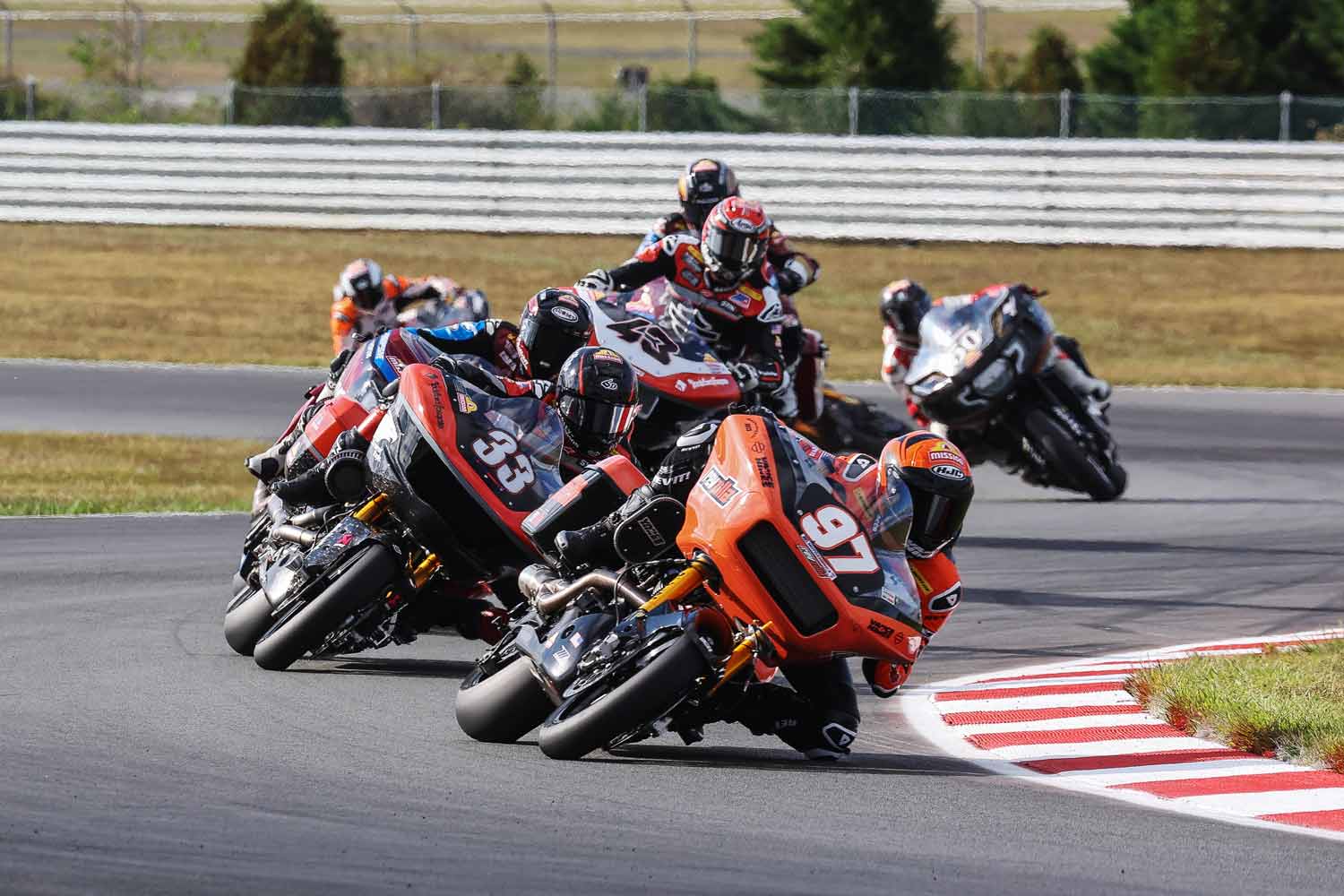
The idea of introducing a bagger championship within MotoGP can appear counter-intuitive. Heavy motorcycles, lifestyle-driven brands, and a cultural background far removed from prototype racing.
Yet this contrast is precisely what makes the project strategically interesting.
Viewed purely through a sporting lens, the initiative raises legitimate questions. Viewed through a media, commercial, and audience-development lens, it begins to look less like a gamble and more like a calculated evolution.
MotoGP’s Structural Challenge: Audience Expansion
MotoGP represents the pinnacle of motorcycle racing technology. However, technical excellence alone is no longer sufficient to drive sustained growth.
The championship remains:
- Technically admired
- Highly specialized
- Strong in traditional European markets
But it continues to face challenges in:
- Broadening its demographic reach
- Attracting lifestyle-oriented audiences
- Engaging brands outside the motorsport ecosystem
The bagger championship addresses these challenges not by altering MotoGP’s core product, but by adding an adjacent layer.
Why the Harley-Davidson Connection Matters
Harley-Davidson and MotoGP operate in distinct cultural territories.
MotoGP stands for precision, performance, and technological excellence.
Harley-Davidson stands for identity, lifestyle, and community.
The value exchange here is not technical—it is cultural and demographic.
Harley-Davidson contributes:
- A deeply loyal, lifestyle-driven fanbase
- Strong brand equity in North America
- Cultural relevance beyond racing
MotoGP contributes:
- Global media reach
- Premium sporting credibility
- A mature commercial and broadcast ecosystem
The bagger championship functions as a controlled interface between these two worlds, allowing crossover without brand dilution.
Commercial Potential Beyond Traditional Motorsport Sponsorship
Prototype racing environments often present a high barrier to entry for non-endemic brands. The language is technical, the narratives are complex, and activation opportunities can feel limited.
Bagger racing simplifies this equation.
It naturally aligns with sectors such as:
- Apparel and lifestyle brands
- Riding gear and helmet manufacturers focused on design and identity
- Custom, accessory, and personalization companies
- Music, art, and cultural platforms
- Premium automotive and lifestyle brands
These industries already overlap with the Harley-Davidson universe. The bagger championship gives them a credible access point into MotoGP without requiring deep technical alignment.
Fanbase Expansion Without Product Dilution
One of the most common risks in motorsport diversification is dilution of the core product. The bagger championship mitigates this risk by remaining clearly distinct from MotoGP’s premier classes.
Prototype racing retains its technical purity.
The bagger championship adds:
- Visual and cultural contrast
- Narrative diversity
- Additional entry points for new audiences
This parallel structure allows MotoGP to broaden its appeal without compromising its competitive identity.
Industry Validation and Early Commitment
The project has already received notable internal validation.
Public endorsement from Alessio Salucci, team manager of VR46 Racing Team, suggests recognition of the initiative’s strategic relevance from within the paddock itself.
Operational credibility is further reinforced by the confirmed participation of teams such as:
- Cecchini Racing
- Saddlemen Racing
- Joe Rascal Racing
Their involvement indicates that this is not a conceptual exercise, but a project with tangible ecosystem support.
Why This Approach Differs from MotoE
The comparison with MotoE is unavoidable.
MotoE was designed as a technology-forward, sustainability-driven championship. While conceptually sound, it struggled to establish:
- Strong emotional engagement
- Consumer aspiration
- Clear visual and cultural differentiation
The bagger championship reverses this logic. It is emotion-led rather than technology-led, built on identity and community before innovation.
A Strategic Evolution, Not a Disruption
This initiative does not attempt to redefine MotoGP’s competitive essence. Instead, it repositions MotoGP within a broader cultural and commercial context.
The bagger championship is not about performance benchmarking.
It is about:
- Expanding commercial surfaces
- Diversifying media narratives
- Creating relevance for new audiences
In that sense, it represents a quiet but coherent evolution—one that acknowledges that modern motorsport growth depends as much on culture and storytelling as it does on speed and technology.
Not a racing experiment, but a media strategy.