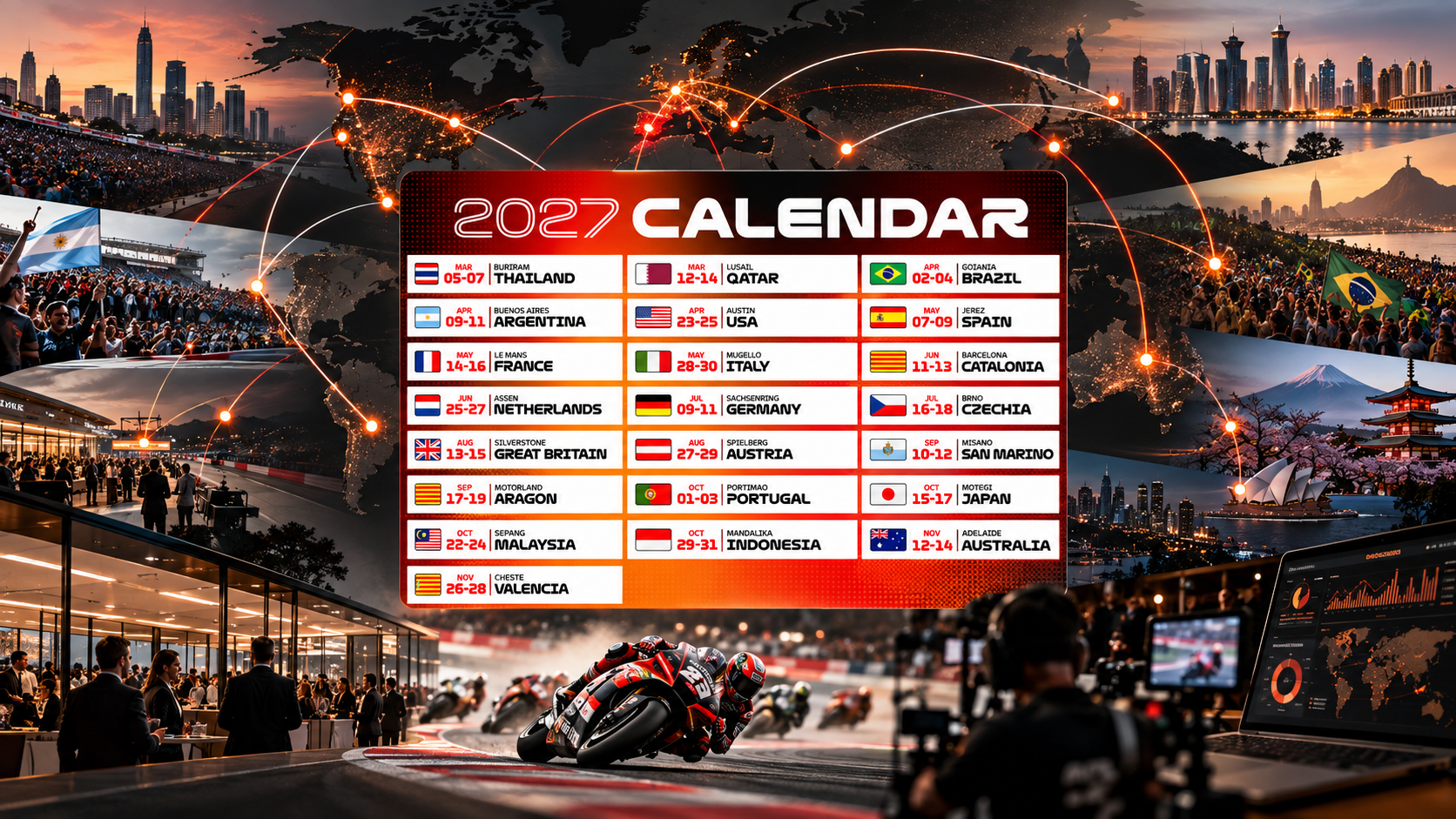
Walking through EICMA yesterday, one thing was impossible for me to ignore.
The Chinese motorcycle industry is changing.
Not simply in terms of products.
In terms of identity.
For years, the dominant Western perception of Chinese manufacturing was relatively simple: enormous industrial capability, competitive pricing and the ability to produce components or complete products that would eventually be developed, repositioned or commercialised by established European, Japanese or American brands.
That picture is becoming outdated.
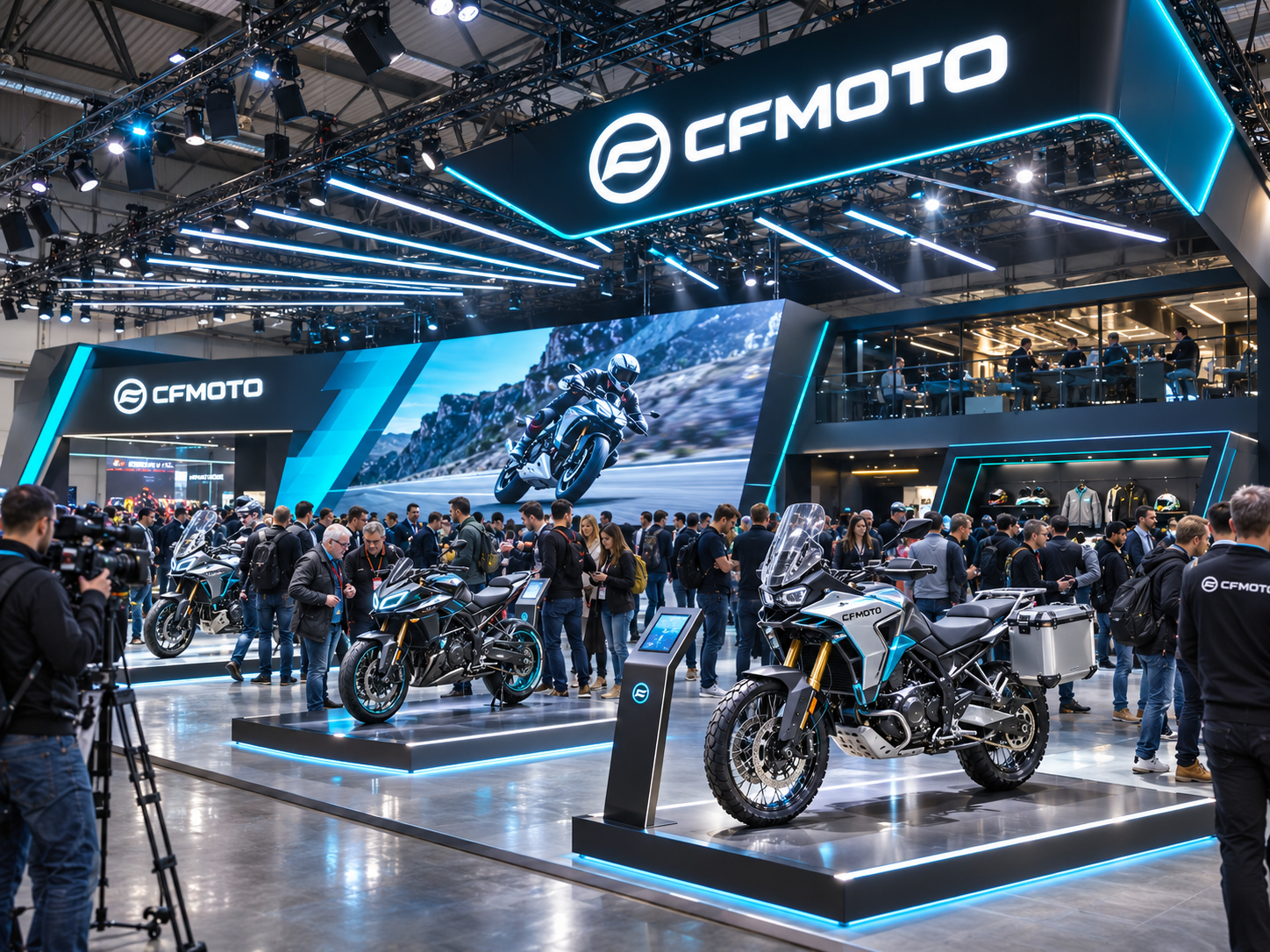
At EICMA, brands such as CFMOTO and KOVE were not presenting themselves like anonymous manufacturing giants trying to enter Europe through price alone.
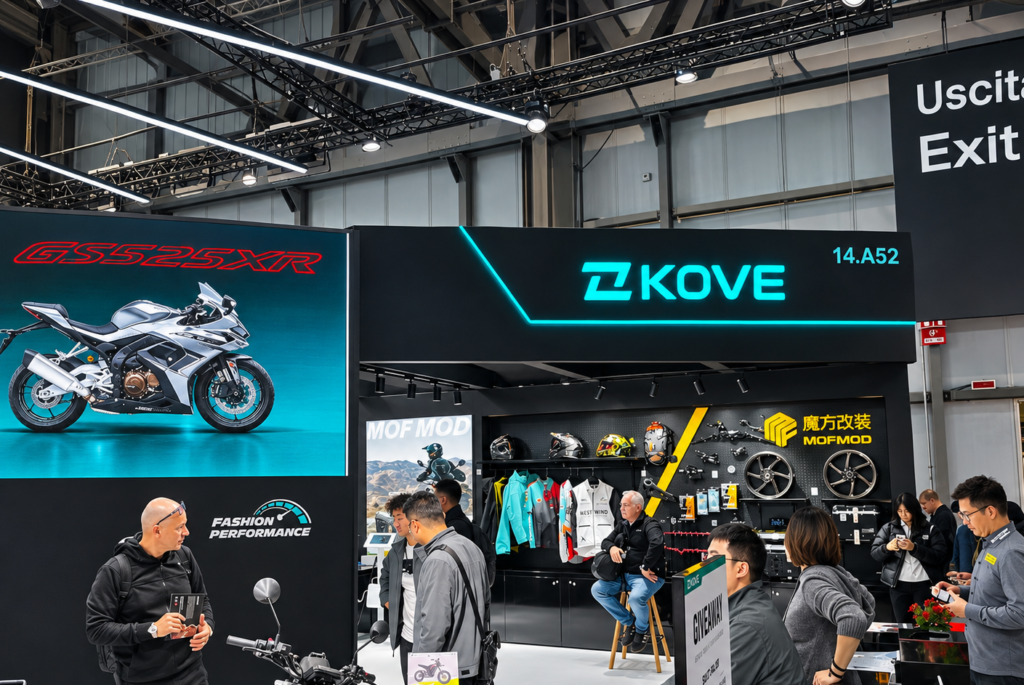
They were presenting themselves as brands.
Large stands.
Strong visual identities.
Product launches.
Cinematic videos.
Carefully designed content.
Storytelling.
Lifestyle.
Technology.
Racing.
In other words, they are increasingly adopting all the elements that modern consumers now expect from a global brand.
And that could have major consequences for motorsport.
EICMA’s official 2026 exhibitor list reflects the scale of this presence, including CFMOTO, KOVE, ZEEHO and a very large number of Chinese manufacturers, suppliers and technology businesses across the exhibition.
But numbers alone do not tell the most interesting part of the story.
What interested me was how they were presenting themselves.
From Producing Products to Producing Meaning
Manufacturing capability can create a motorcycle.
Brand identity creates a reason to want it.
That distinction is becoming increasingly important.
Consumers today do not only buy specifications.
They buy stories.
Design language.
Communities.
Cultural associations.
Athletes.
Content.
Values.
Aesthetic codes.
And increasingly, Chinese manufacturers appear to understand that competing globally requires all of these layers.
The market data suggests that this transformation is beginning to translate into commercial momentum too.
Across the European motorcycle market in 2026, several Chinese manufacturers have been among the fastest-growing established brands. According to MotorCyclesData, CFMOTO was up around 62% year to date, Zontes around 57% and Voge around 47%, all significantly ahead of the overall European market.
That does not mean the traditional manufacturers are disappearing.
Far from it.
Honda remains the European market leader and Yamaha remains one of the largest motorcycle brands in the world.
But it does mean that the competitive landscape is becoming much more complex.
And once a manufacturer begins competing on product, distribution and price, the next battle is usually fought somewhere else.
Brand perception.
Motorsport Is One of the Fastest Ways to Change Perception
This is where racing becomes particularly interesting.
Motorsport can compress years of brand-building into something much faster.
Performance creates credibility.
Competition creates stories.
Riders create personalities.
Winning creates memory.
And being present in an elite championship places a manufacturer next to companies that consumers have trusted for decades.
This is one reason I believe Chinese manufacturers entering international competition deserves much more attention from the sponsorship industry.
They should no longer be viewed simply as motorcycle manufacturers looking for European distribution.
They are becoming potential motorsport properties.
Potential sponsors.
Potential title partners.
Potential technology partners.
And eventually, potentially, manufacturers competing at the highest level themselves.
KOVE is already using racing as part of its international positioning.
CFMOTO has gone significantly further.
CFMOTO Is Building an Ecosystem, Not Just Buying Visibility
CFMOTO’s relationship with Aspar is particularly interesting to me.
The partnership brought CFMOTO into the Moto2 and Moto3 structure under the CFMOTO Aspar Team identity, after the Chinese manufacturer first entered Grand Prix racing in 2022.
But the value of Aspar goes beyond having motorcycles circulating with a logo.
Aspar has built an ecosystem.
A Grand Prix team.
Talent development.
A riders’ school.
Its own circuit in Valencia.
Training programmes.
Corporate experiences.
Content.
A pathway through different levels of competition.
The Aspar Circuit itself operates rider and mechanic training programmes, competition initiatives and corporate activities, and forms part of the broader academy structure developed around the Aspar organisation.
That makes CFMOTO’s choice strategically interesting.
It is not only associating itself with racing.
It is embedding itself within an infrastructure that can help build racing culture around the brand.
That distinction matters.
Because if the long-term objective is eventually to become credible at the highest level, the strongest route is probably not to suddenly arrive in MotoGP with a large cheque.
It is to build legitimacy progressively.
Talent.
Technical knowledge.
Teams.
Infrastructure.
Fans.
Content.
Results.
Identity.
And then, perhaps, the premier class.
MotoGP Is No Longer Just a Fantasy
Any discussion about CFMOTO entering MotoGP still needs an important disclaimer.
There is no confirmed entry date.
And I would not present one as inevitable.
Jorge Martínez “Aspar” has publicly said that CFMOTO is very interested in eventually progressing towards WorldSBK and MotoGP, while also stressing that there is currently no defined timetable. Reports this autumn have also described the development of a new European racing base in Rimini as part of the company’s wider racing ambitions.
So for now, it remains a direction rather than a confirmed MotoGP programme.
But that direction itself matters.
Because CFMOTO does not appear to be approaching racing as a temporary marketing campaign.
It increasingly looks like part of a broader brand-building strategy.
And that is exactly what I saw reflected at EICMA.
The Sponsorship Industry Should Pay Attention
There is also another side to this transformation.
Chinese manufacturers should not only be discussed as potential future MotoGP constructors.
They should increasingly be considered when evaluating the future sponsorship marketplace.
As these companies internationalise, they need exactly the things global sports properties can provide.
Brand awareness.
Credibility.
Market entry.
Lifestyle association.
Content.
Hospitality.
B2B relationships.
Technology positioning.
Local activation.
Global consistency.
Motorsport can provide all of them.
This is especially important when discussing brand association.
Historically, some rights holders may have asked whether association with an emerging Chinese manufacturer could strengthen or weaken the perception of their property.
That calculation may increasingly change.
If companies such as CFMOTO continue building sophisticated identities, improving products, increasing European market share and investing in racing, the association can eventually work in both directions.
The championship gives credibility to the manufacturer.
The manufacturer brings investment, technology, access to new audiences and potentially access to one of the most strategically important consumer markets in the world.
That is no longer a one-way value transfer.
It can become a partnership.
Could Chinese Manufacturers Become the New Japanese?
This is the question I left EICMA thinking about.
And it needs to be phrased carefully.
Japan is not disappearing from motorcycling.
Honda and Yamaha remain enormous companies with extraordinary heritage, technology, distribution and brand recognition.
But inside MotoGP, the competitive balance has clearly shifted.
In the current 2026 Constructors’ Championship, Aprilia and Ducati lead the standings, KTM sits third, while Honda and Yamaha are fourth and fifth.
So I would not describe what is happening as the collapse of Japanese motorcycle manufacturing.
I would describe it as a change in the centre of competitive gravity inside MotoGP.
And history makes the comparison interesting.
There was a time when Japanese manufacturers were the challengers.
They had to prove that their engineering could compete with established European names.
Racing became part of that process.
Eventually Honda, Yamaha and Suzuki did much more than compete.
They helped define entire eras of Grand Prix motorcycle racing.
Could China eventually experience a similar journey?
Perhaps.
But the path would probably look different.
Japanese manufacturers built much of their global identity during an era dominated by engineering, racing success and dealership networks.
Chinese manufacturers are arriving in an era where they must also master social media, creator culture, cinematic content, community-building, design and global storytelling from the beginning.
That could actually accelerate the process.
The Next Battle Is Cultural
This is why the enormous CFMOTO stand at EICMA interested me as much as the motorcycles themselves.
The real transformation is not only mechanical.
It is cultural.
A manufacturer can create a technically excellent motorcycle and still struggle to become desirable.
Desirability requires something else.
It requires people to recognise the logo.
Understand the values.
Know the riders.
Follow the content.
Want the merchandise.
Remember the victories.
Associate themselves with the community.
That is where motorsport becomes powerful.
And it is also where sponsorship professionals should start looking at Chinese brands differently.
Not simply as emerging manufacturers.
But as companies entering the phase where they need to convert industrial power into cultural relevance.
EICMA May Be Showing Us the Future Earlier Than MotoGP
Trade shows are useful because they allow you to see changes before they become fully visible elsewhere.
At EICMA, the transformation is already tangible.
Chinese manufacturers are taking more space.
Their presentation is becoming more sophisticated.
Their visual language is improving.
Their content is becoming more emotional.
Their ambitions are becoming more global.
And their involvement in competition is growing.
MotoGP could become one of the places where the next phase of that transformation plays out.
Whether CFMOTO ultimately becomes the first Chinese manufacturer to enter the premier class remains unknown.
Whether another brand eventually gets there first is equally impossible to predict.
But I increasingly believe the broader question is no longer:
Can a Chinese manufacturer build a competitive motorcycle?
The more interesting question is:
Can it build a brand strong enough that fans want it to win?
Because that is the moment a manufacturer stops simply participating in an industry.
It starts becoming part of its culture.
And after walking through EICMA, I think China is much closer to that point than many people still realise.
Perhaps Chinese manufacturers will not become “the new Japanese”.
They do not need to.
But they may be entering the same critical stage the Japanese manufacturers once did:
the moment when industrial credibility begins turning into sporting credibility, and sporting credibility begins turning into brand identity.
If that process continues, MotoGP may eventually become not just one of the places where Chinese manufacturers demonstrate their technology.
It may become one of the places where they build their history.