The unveiling of MotoGP’s new Adelaide circuit represents an important moment for the Championship.
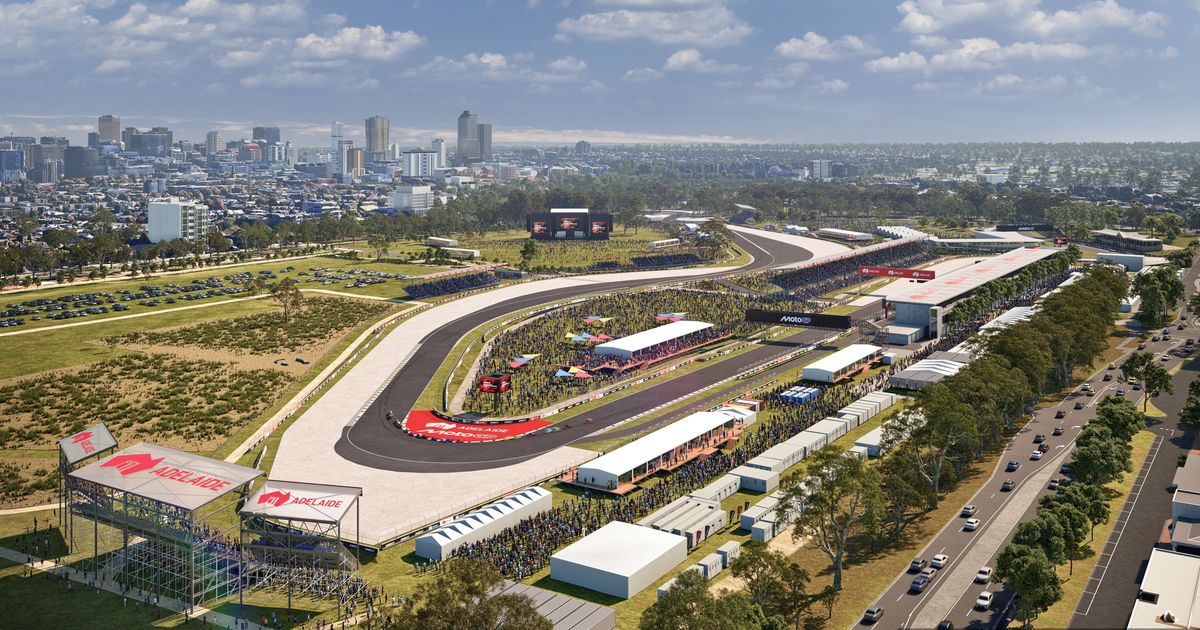
From 2027, the Australian Grand Prix will move from Phillip Island to a new 4.13-kilometre, 15-corner circuit running through Adelaide.
MotoGP describes it as its first city-centre race, combining premier-class motorcycle racing with the atmosphere of a major festival.
From a sporting perspective, the implications are obvious.
But from a commercial perspective, something else may be even more interesting.
Adelaide brings MotoGP physically into the city.
And when considered alongside some of the activations MotoGP has already delivered during 2026, it raises a bigger question:
Is the relationship between the Grand Prix and its host city beginning to change?
From destination circuit to destination event
Traditionally, many MotoGP venues operate largely as destinations in their own right.
Fans travel to the circuit.
Sponsors activate at the circuit.
Hospitality is concentrated at the circuit.
Much of the commercial ecosystem exists within the physical boundaries of the Grand Prix venue.
There is nothing inherently wrong with this model. But it creates a natural limitation: the audience surrounding many activations is largely composed of people who have already decided to engage with MotoGP.
Cities offer a very different environment.
They contain tourists, residents, businesses, retail, hospitality, nightlife, cultural venues and public spaces — audiences and infrastructure that exist independently from the race.
And during 2026, MotoGP has provided some interesting examples of what happens when the Championship starts connecting those two worlds.
Barcelona: taking the activation to the city
Ahead of the Catalan Grand Prix, MotoGP staged a two-day Fan Fest in Plaça de Catalunya, bringing part of the Championship directly into central Barcelona.
The programme included MotoGP simulators, motorcycles, gaming, rider appearances and entertainment, alongside partner involvement.
But the significance goes beyond the individual activities.
For two days, MotoGP created a touchpoint with people before they reached the circuit — including people who might never reach it at all.
That distinction matters commercially.
The potential audience changes from race attendees to people present in the city.
London: taking Grand Prix week beyond Silverstone
MotoGP went further ahead of the British Grand Prix.
Before racing began at Silverstone, the Championship took over London’s Outernet, bringing riders, motorcycles from the MotoGP manufacturers, the championship trophy and interactive experiences into the centre of the capital.
More significantly, the traditional pre-event MotoGP press conference was moved there as well.
That turns the initiative into something more than a promotional roadshow.
An established part of the Grand Prix weekend itself was physically separated from the circuit and placed in an urban entertainment environment.
MotoGP itself presented the initiative as part of its continuing effort to take the Championship beyond racetracks and into major cities, reaching new audiences while creating additional experiences for existing fans.
The objective is therefore no longer simply to persuade more people to visit Silverstone.
Part of the MotoGP experience can come to them.
Adelaide: when the Grand Prix enters the city
And that brings us back to Adelaide.
Barcelona brought activation into the city.
London brought part of Grand Prix week into the city.
Adelaide will bring the Grand Prix itself into the city.
The distinction between host destination and race venue therefore becomes much less defined.
This doesn’t mean MotoGP is necessarily heading towards a future dominated by street circuits.
The more interesting development may instead be this:
MotoGP is reducing the distance between the race and the city.
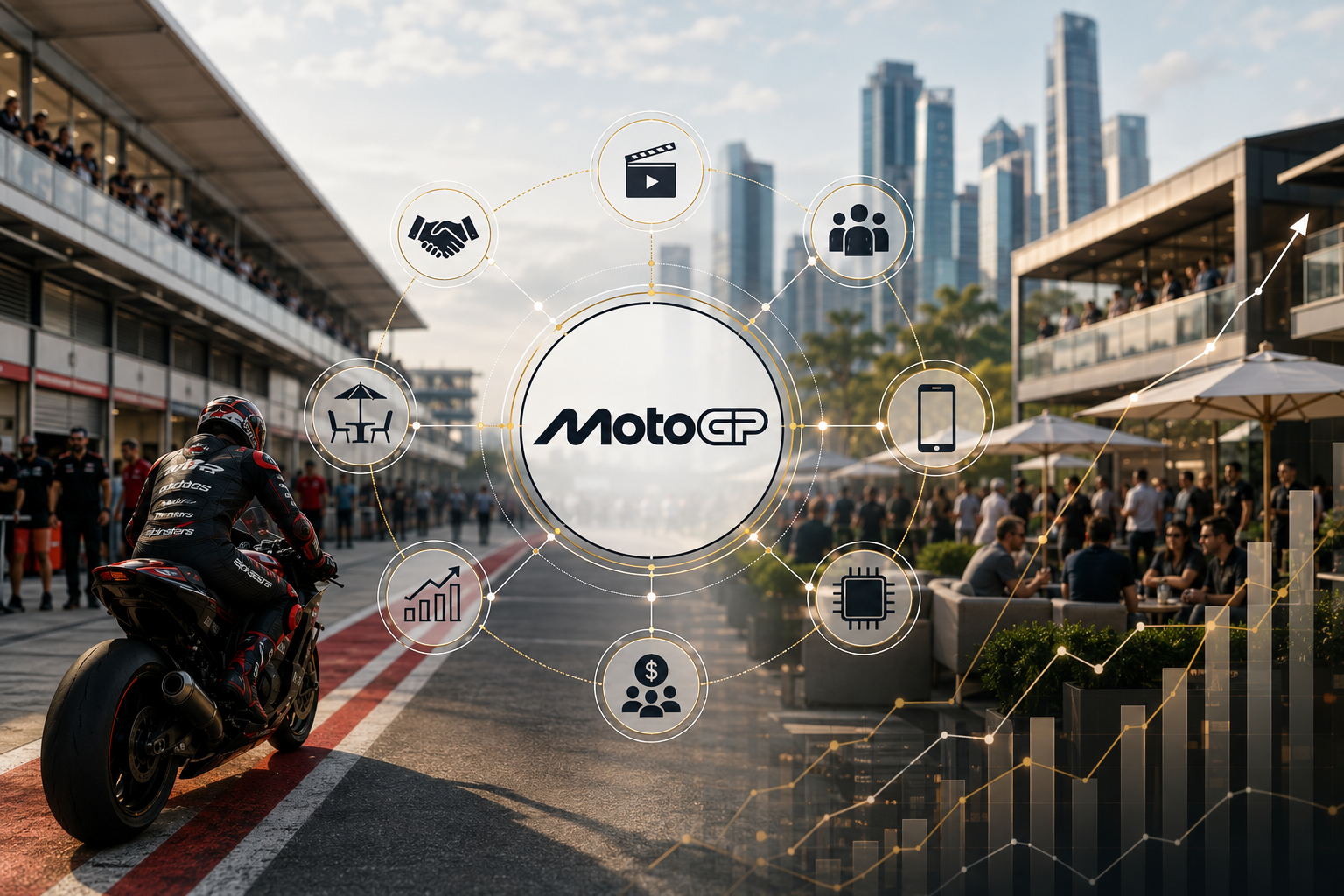
And that creates interesting possibilities for sponsorship.
A larger activation canvas
Consider what a brand can potentially build around a Grand Prix embedded within a city.
A rider appearance no longer has to happen at the circuit.
Hospitality doesn’t necessarily begin inside the paddock.
A product launch could happen downtown. A team could host a pre-race event involving riders and partners. A fashion or lifestyle sponsor could activate through retail. A food and beverage partner could build experiences around nightlife.
Hotels, restaurants, entertainment venues, tourism infrastructure and public spaces can potentially become additional components of the Grand Prix ecosystem.
The commercial footprint of the event becomes larger than the physical footprint of the circuit.
And that’s where the sponsorship opportunity becomes particularly interesting.
Event-Generated Events
This connects with a phenomenon I’ve been observing increasingly in motorsport and that I describe as Event-Generated Events (EGE).
These are experiences that exist because of the gravitational pull of a major sporting event but do not necessarily require attendance at the event itself.
A fan festival is an obvious example.
But the concept can go much further:
Pop-up venues. Sponsor events. Exhibitions. Product launches. Concerts. Rider appearances. Hospitality experiences. Collaborations with local businesses.
The Grand Prix becomes the catalyst.
The surrounding events create additional audiences and commercial touchpoints.
Barcelona’s Fan Fest and London’s Outernet activation are two different manifestations of this principle.
Adelaide could create an environment where those opportunities become even more deeply integrated into the Grand Prix itself.
From exposure to participation
For sponsorship, the implication could be significant.
Traditional motorsport sponsorship has always offered enormous value through visibility, association, hospitality and content.
But modern partnerships increasingly require something else:
Participation.
Brands want consumers to interact with the partnership rather than simply see it.
Bringing MotoGP closer to cities increases the number of places where that interaction can happen.
And, importantly, it can expose MotoGP partners to audiences beyond existing motorsport fans.
Someone walking through Plaça de Catalunya may encounter MotoGP without having bought a Grand Prix ticket.
Someone visiting central London can experience MotoGP without travelling to Silverstone.
And in Adelaide, residents and tourists will effectively find themselves within the environment surrounding the Grand Prix.
That creates a very different consumer journey.
The race remains the centre. The ecosystem gets bigger.
None of this diminishes the importance of the circuit.
The racing remains the product around which everything else exists.
But perhaps the commercial opportunity lies in making the ecosystem surrounding that product much larger.
Barcelona demonstrated how MotoGP can bring fan engagement into a city.
London demonstrated how elements traditionally associated with the Grand Prix weekend can move beyond the circuit.
Adelaide will now test what happens when the distinction between city and race venue becomes even smaller.
For teams, rights holders and sponsors, that could create an entirely new layer of activation opportunities.
The question may therefore no longer be simply:
How do we bring more people to the Grand Prix?
It could increasingly become:
How much of the Grand Prix can we bring to them?
And from a sponsorship perspective, there is an even more important question:
If the Grand Prix is no longer confined to the circuit, should sponsorship activation still be?
The Sponsorship Apex
Exploring the business, strategy and evolution of sponsorship in MotoGP.