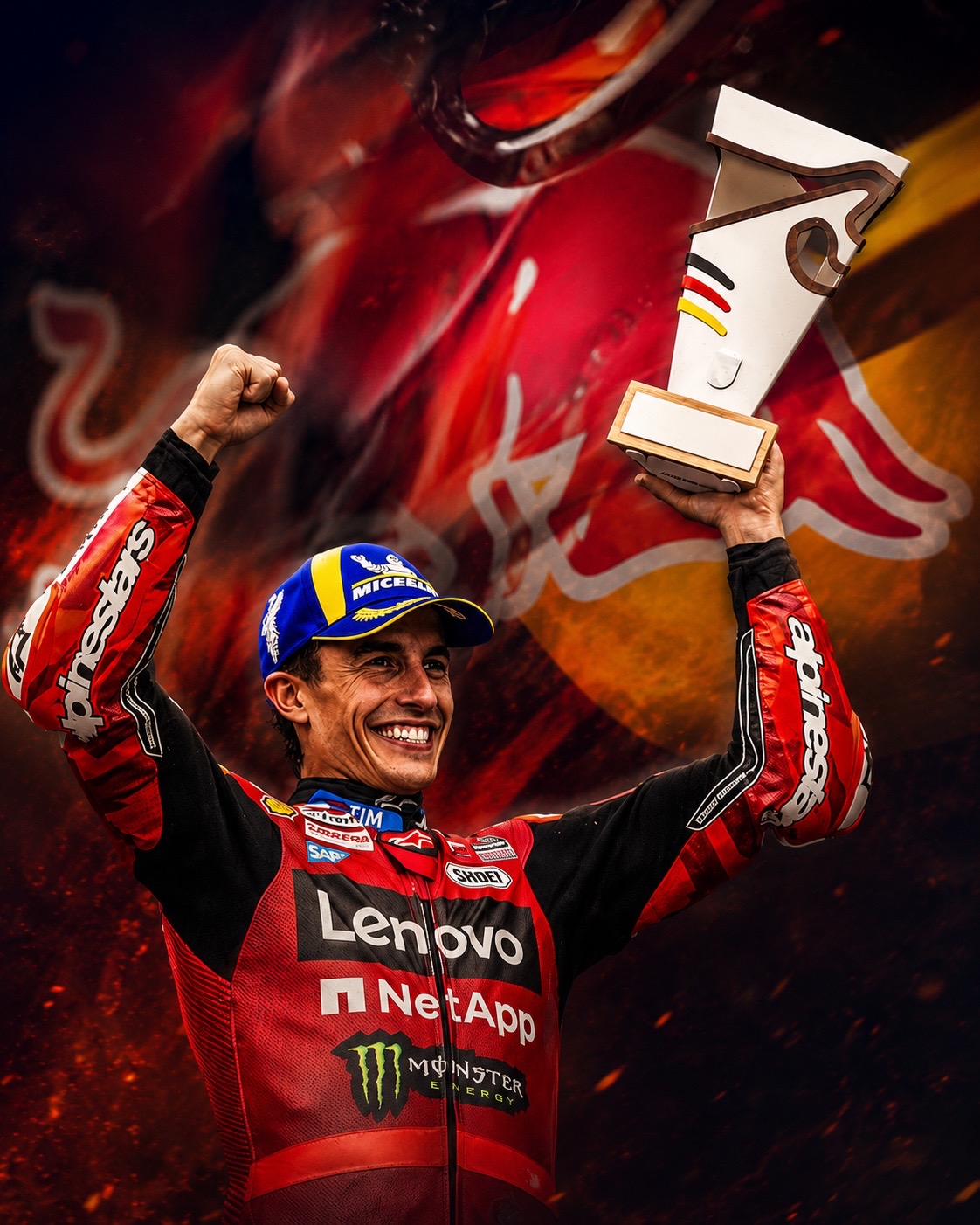
Some sporting identities become inseparable.
Marc Márquez and the Sachsenring are one of the best examples in modern MotoGP.
Watching him win there once again made me think about another type of identity. Not the one built between a rider and a circuit, but the one that can be built between a team and a brand.
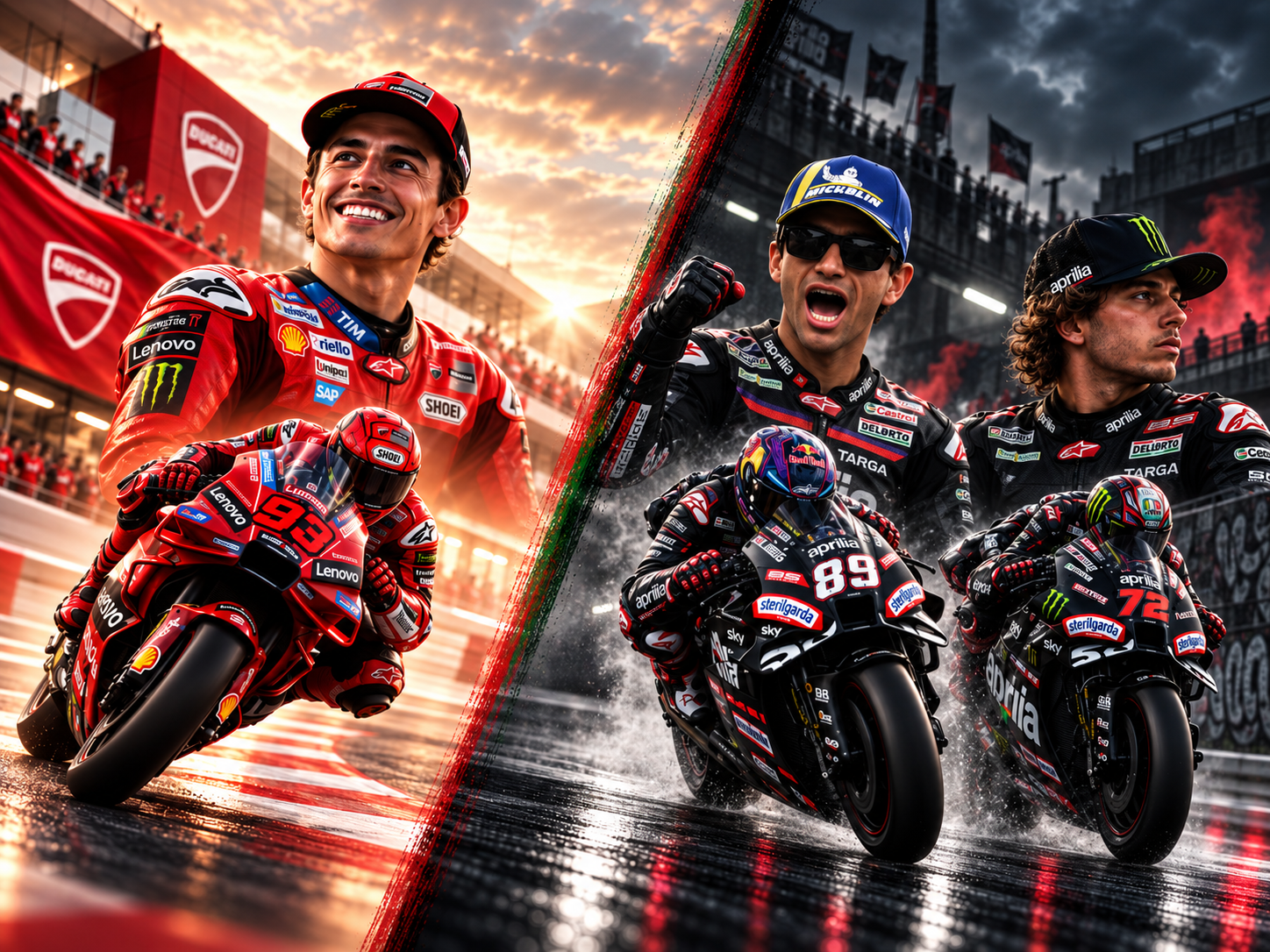
Ironically, despite being one of Red Bull’s most iconic athletes, Márquez had to end that long-standing partnership when he joined the Ducati factory team, as Monster’s existing partnership with the team made the coexistence of the two competing brands impossible.
This week, another important commercial story emerged.
Red Bull and KTM announced the renewal of one of the longest-standing partnerships in MotoGP.
At first glance, these seem like two unrelated stories.
I believe they’re actually talking about the same thing.
Identity.
For decades, Red Bull has been much more than a sponsor in motorsport.
The company has built one of the strongest sports marketing ecosystems in the world, investing not only in teams and athletes but also in events, media, content production and even owning sports properties across multiple disciplines.
MotoGP has always been an important part of that strategy.
Over the years, Red Bull has partnered with some of the championship’s most successful riders, including Marc Márquez, helping strengthen an association between the brand and elite performance.
But the relationship wasn’t one-sided.
Red Bull undoubtedly benefited from having one of MotoGP’s greatest champions representing the brand.
At the same time, Márquez benefited from being associated with one of the most recognisable brands in global sport.
Red Bull’s identity extends far beyond racing.
It represents ambition.
Performance.
Risk-taking.
Youth culture.
Action sports.
Innovation.
Those values naturally became part of Márquez’s personal image.
That’s what makes great sponsorships different.
They’re no longer based on exposure alone.
They become a transfer of identity in both directions.
I believe Red Bull and KTM have reached exactly that point.
Over the years, they haven’t simply shared sponsorship rights.
They’ve built one of the strongest co-branding examples in modern motorsport.
The orange bikes.
The Red Bull colours.
The “Ready to Race” philosophy.
Motocross.
Rally.
Moto3.
MotoGP.
Everything belongs to the same narrative.
Today, it’s almost impossible to think about KTM in premier-class motorcycle racing without immediately thinking about Red Bull.
And the opposite is equally true.
That kind of association isn’t created by signing a contract.
It’s built through consistency over many years.
Every successful season.
Every championship.
Every activation.
Every piece of content.
Every shared story.
Each one adds another layer to the relationship.
Eventually, the sponsor stops feeling like an external company.
It becomes part of the team’s identity.
To me, that’s the highest level sponsorship can reach.
The highest value isn’t created when one brand borrows equity from another.
It’s created when both brands continuously strengthen each other’s identity.
Looking ahead, another fascinating scenario could emerge.
With Monster’s current agreement with Ducati eventually approaching its conclusion, Ducati will inevitably enter a new commercial cycle.
Whether Red Bull could become part of that future remains purely speculative, but it would certainly represent one of the most interesting sponsorship scenarios to follow.
It would also reunite Marc Márquez with one of the brands that has defined much of his career.
There could even be another layer to the story.
A potential Márquez-Acosta pairing would create one of the strongest Iberian narratives MotoGP has seen in years.
For brands, that wouldn’t simply mean having two exceptional riders.
It would mean access to a powerful cultural story capable of resonating far beyond racing.
Perhaps even creating the conditions for a Spanish global brand to build its own long-term identity around that narrative.
Whether any of these scenarios eventually become reality remains to be seen.
But one lesson already feels clear.
As MotoGP continues to evolve commercially, identity may become one of the championship’s most valuable currencies.
Because the partnerships that create the greatest long-term value won’t necessarily be the biggest.
They’ll be the ones that become impossible to imagine apart.
The moment fans stop seeing a sponsor and start seeing it as part of the team’s identity, sponsorship stops being sponsorship.
It becomes culture.