What happens when a single figure changes how an entire industry is perceived?
In MotoGP, Guenther Steiner’s arrival at Tech3 may represent something far broader than a management appointment: a signal that equity investors are beginning to view MotoGP teams as long-term franchise assets rather than pure racing operations.
It may sound unusual to talk about a “Ronaldo Effect” in the world of two wheels. Still, I have always been fascinated by how insiders sometimes coin new expressions that later become widely adopted across entire industries.
When Cristiano Ronaldo moved to Saudi Arabia, he brought global attention to a championship where, until then, very few top players wanted to go. Following his arrival, the league rapidly attracted elite talent and is now regularly considered by some of Europe’s best players as a viable option during career negotiations. The effect was not only sporting, but cultural, commercial and reputational.
The effect I am referring to here, however, is broader than Guenther Steiner joining MotoGP.
There is nothing to criticise about the South Tyrolean manager — on the contrary, I consider him one of the most effective motorsport executives of recent years in terms of charisma, communication and leadership. Yet beyond the cinematic narratives often associated with Drive to Survive, what interests me most is the commercial logic behind the recent acquisition of the Tech3 team.
Behind the former Haas Team Principal, there is a particularly interesting ownership structure formed by Bolt Ventures, Main Street Advisors and IKON Capital.
IKON Capital is an investment and advisory business founded by Damien O’Donohoe and Markus Gloël, both of whom previously held leadership and advisory roles at organisations such as Sixth Street Partners, Live Nation, KKR and the San Francisco 49ers. Their background reflects a deep understanding of how sports, media and entertainment properties can be structured, scaled and monetised over time.
Bolt Ventures, led by David Blitzer, is a respected global sports and entertainment investor. Blitzer is Co-Founder and Co-Managing General Partner of Harris Blitzer Sports & Entertainment (HBSE) and brings more than a decade of experience owning and operating professional sports teams across the NBA, NHL, MLB and MLS. This multi-league exposure is particularly relevant when analysing how MotoGP teams may increasingly be evaluated as long-term assets.
Main Street Advisors is an integrated multi-family office and asset management firm based in Santa Monica, California. Through its private equity platform, MSA Acceleration Partners, the firm has invested in and helped build category-defining businesses such as Fenway Sports Group, Beats by Dre, Alpine F1 Team, AC Milan and many others. This reinforces the idea that the Tech3 transaction is not a short-term sporting bet, but a strategic, long-term investment.
All of these details are necessary to make a broader consideration.
Equity platforms and investment groups traditionally operate in sports where it is possible to generate diversified revenue streams from team-owned assets. In most major U.S. and European sports, this includes ticketing from home games and, very often, direct ownership or control of stadiums. These venues generate operating income not only during the season through hospitality and merchandising, but also in the off-season through concerts, live events and other commercial activities.
MotoGP operates under a very different model.
In a championship where ticketing, venues and race promotion are largely controlled by the organiser and local promoters, teams do not own the primary revenue-generating infrastructure. As a result, the team itself becomes the asset.
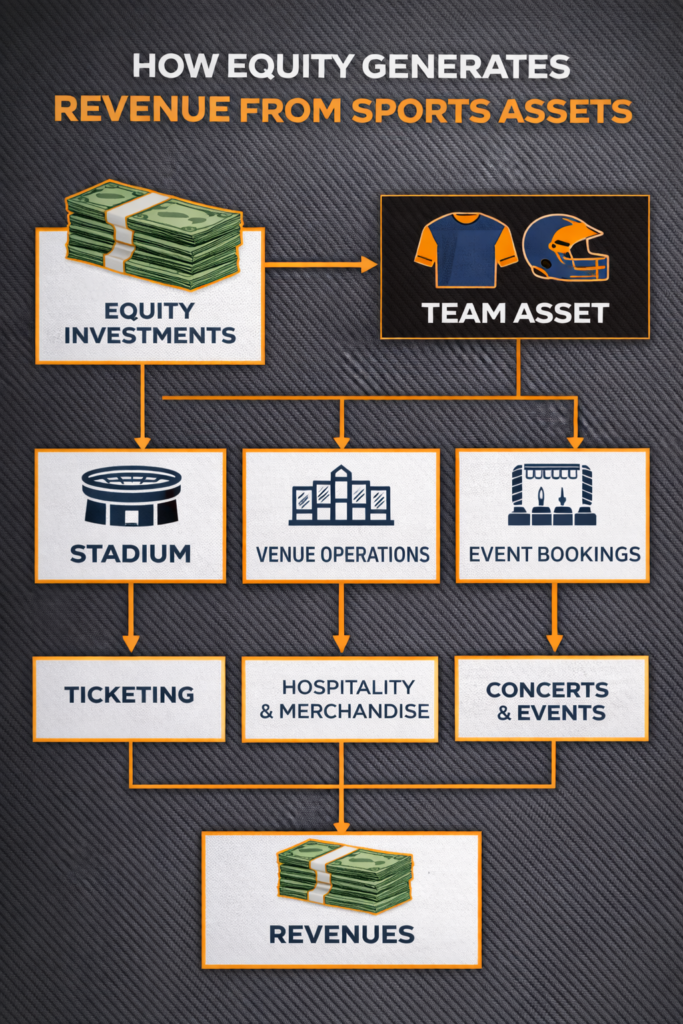
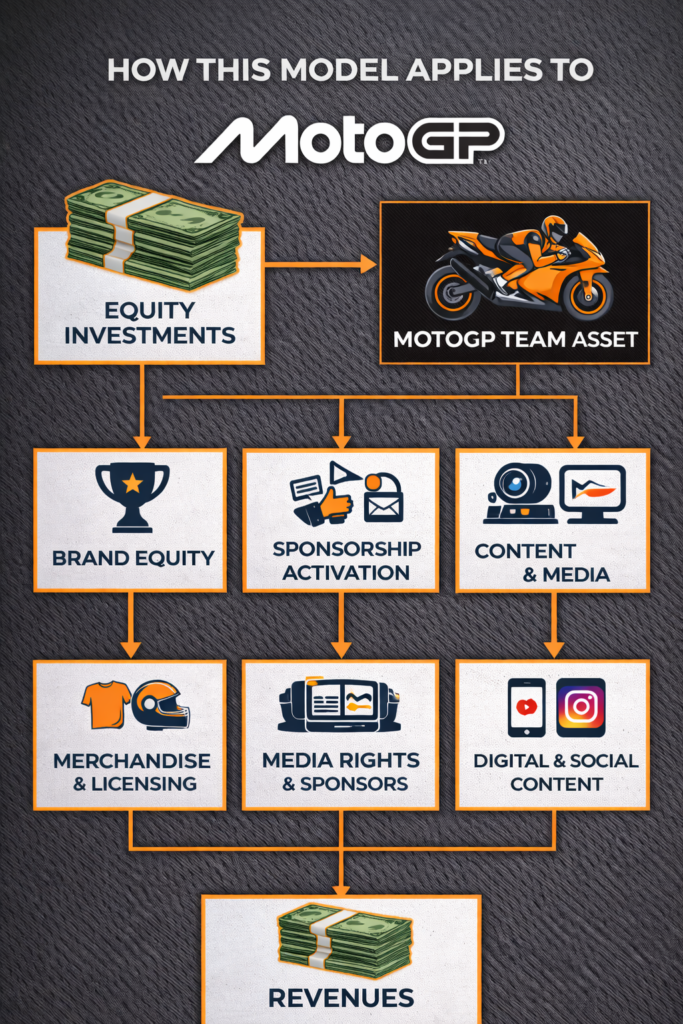
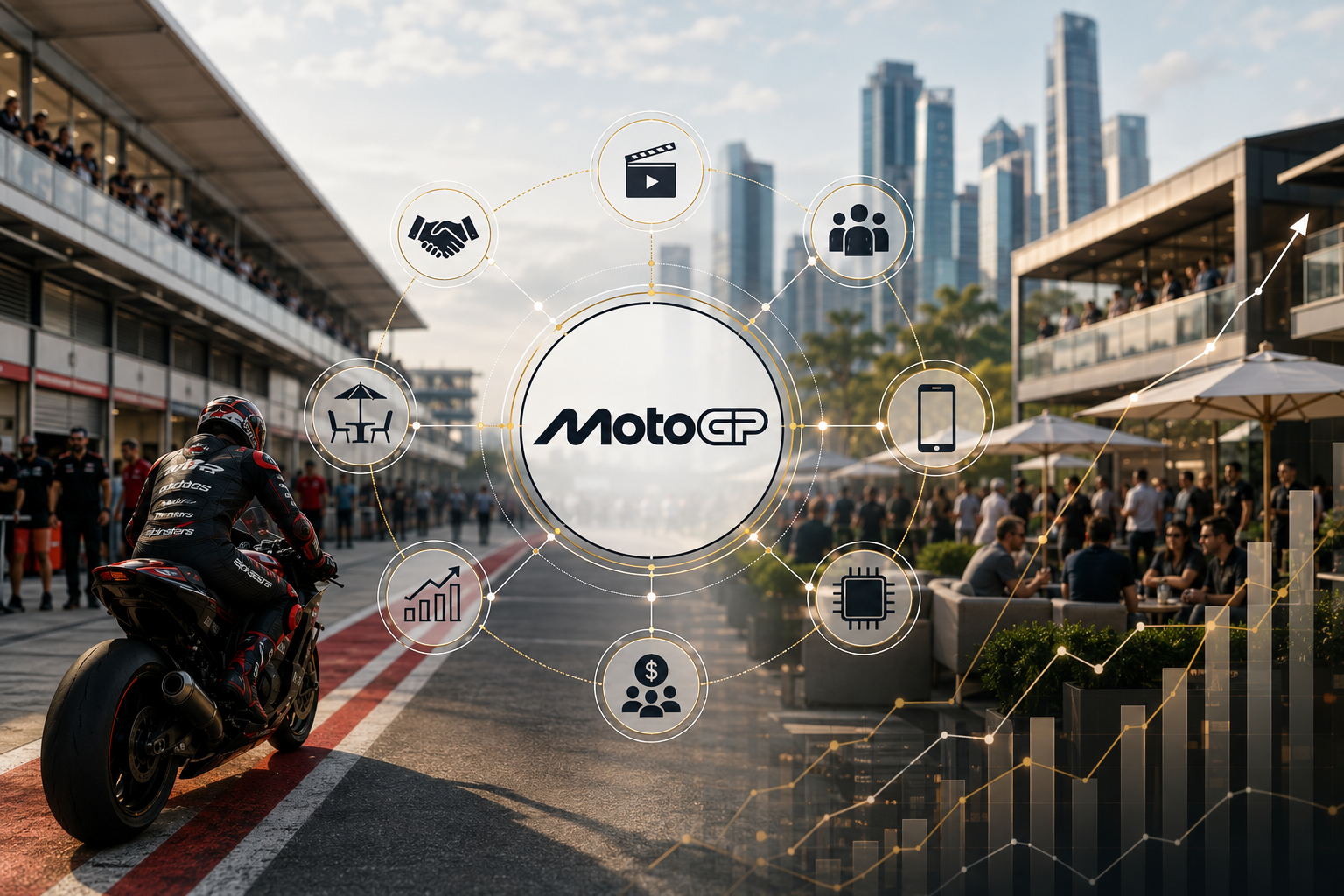
If MotoGP teams are now being acquired and integrated into equity portfolios, this suggests that their future value lies in brand equity, commercial infrastructure, sponsorship activation, media relevance and long-term franchise potential — not only in sporting results.
From this perspective, the potential growth of MotoGP as a championship goes beyond simple forecasting. It points to a structural transformation of the sport.
On this topic, David Blitzer’s words are particularly significant:
“MotoGP is well positioned to enjoy the type of meteoric rise we’ve seen with Formula 1, and we’re confident our investment in Tech3 is an investment in the future of motorsports.”
In my opinion, we are witnessing a genuine shift within the championship. One that could lead not only to a higher level of spectacle on track, but also — and perhaps more importantly — to a more mature, professional and commercially sustainable ecosystem off the track.
This, ultimately, is what I mean by The Ronaldo Effect.