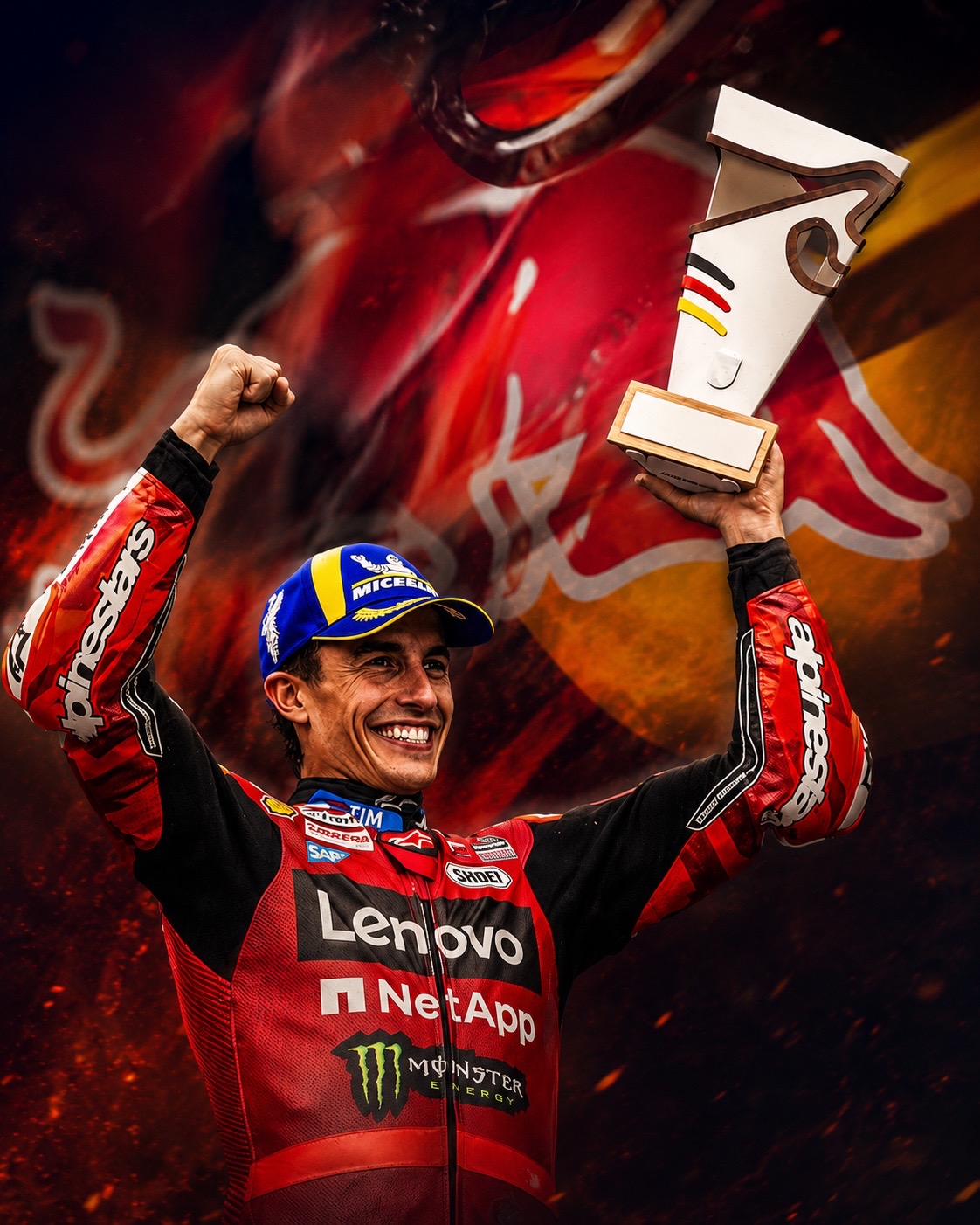
The Circuit of the Americas has a way of producing definitive weekends. The 2026 edition was no exception. Marco Bezzecchi, starting from the second row after a penalty for obstructing Marc Marquez in qualifying, moved to the front by the end of the opening lap — making contact with Pedro Acosta in the process and losing some rear aero — and proceeded to lead every one of the remaining nineteen laps. His margin at the finish over Aprilia teammate Jorge Martin was 2.036 seconds. His fifth consecutive Grand Prix victory. A new record: 121 consecutive laps led in the modern MotoGP era, surpassing Jorge Lorenzo’s previous mark of 103.
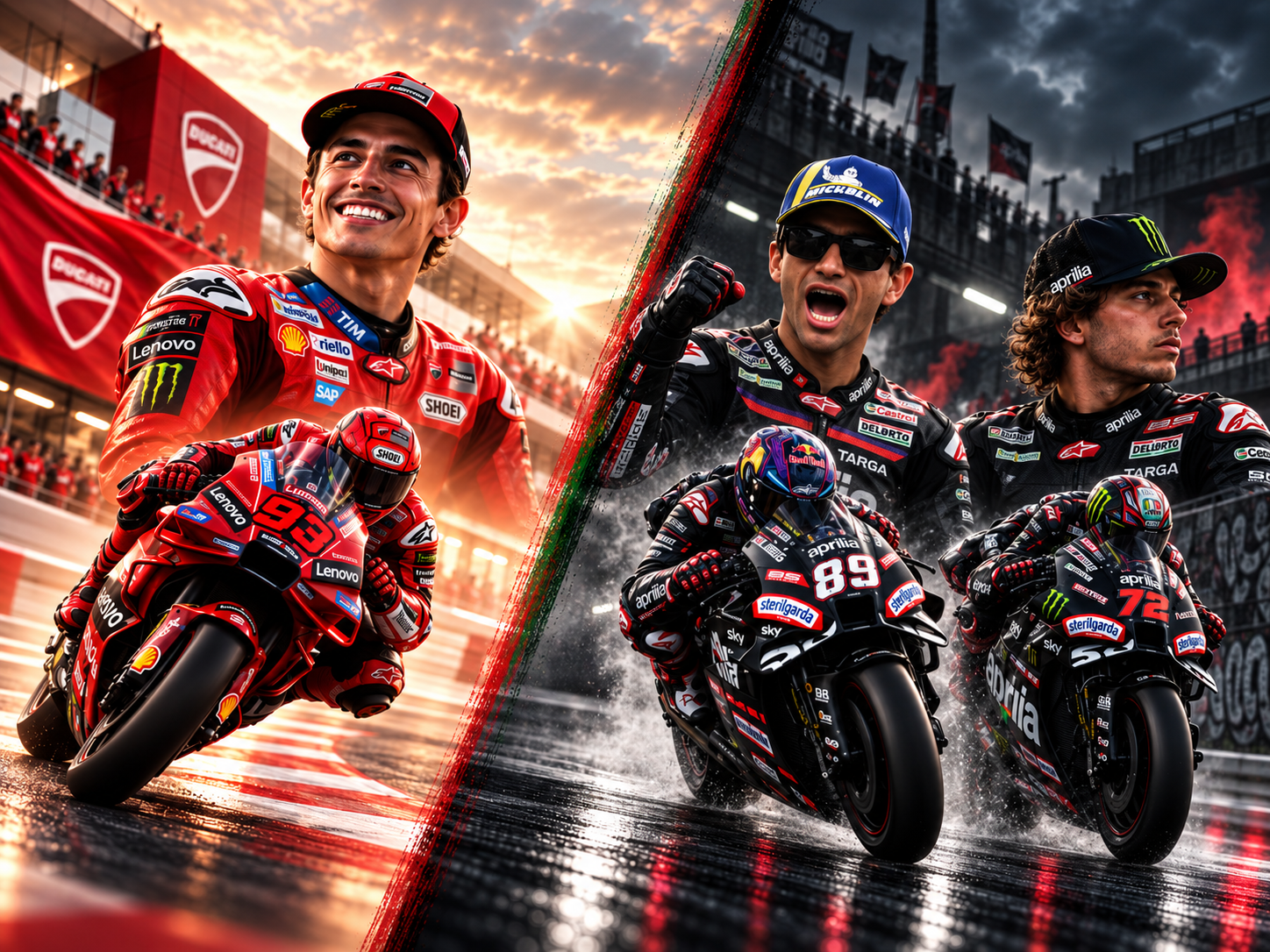
Martin had won the Sprint on Saturday with a last-lap move on Francesco Bagnaia — the kind of composed opportunism that has characterised his opening season in factory Aprilia colours. The weekend confirmed what the first two rounds had suggested: the Aprilia RS-GP is currently the fastest package on the grid, and the two riders sharing it are capable of exploiting it at the highest level without significant interference from each other.
Pedro Acosta completed the podium on his 100th Grand Prix start across all classes — a milestone that arrived quietly, in keeping with a rider who tends to let results speak for him. Fabio Di Giannantonio finished fourth, maintaining his position as the leading Ducati in the championship standings. Marc Marquez, serving a long-lap penalty for Saturday’s incident with Di Giannantonio, recovered to fifth. Bagnaia finished tenth. Three rounds into the season, the picture is clear: Aprilia leads, and the gap is not marginal.
The Bagger World Cup: A New Product and What It Signals
Austin also hosted the first competitive races in the history of the FIM Harley-Davidson Bagger World Cup — MotoGP’s new support series, featuring heavily modified Harley-Davidson Road Glide machines producing over 200 horsepower from Milwaukee-Eight V-Twin 131R engines. Archie McDonald won Race 1. Oscar Gutiérrez won Race 2 after McDonald received a penalty for track limit infringements. The grid was modest at nine riders across four teams — Italian outfit Cecchini Racing, which would have fielded Andrea Iannone, was unable to meet the financial guarantees required for Austin — but the racing was competitive and both races were decided in the final laps.
The series runs for six rounds: Austin, Mugello, Assen, Silverstone, Aragón, and the Red Bull Ring in Austria. Two races per round, twelve races total in the debut season.
The commercial reading of the Bagger World Cup is perhaps more interesting than the sporting one, at least at this early stage. Harley-Davidson is among the most recognisable American consumer brands in existence, and its presence as the naming partner and machine supplier of a MotoGP support series represents a deliberate alignment between the championship and American brand culture. This is not the kind of partnership that emerges from a cold sales conversation. It reflects a considered decision by both Liberty Media and Harley-Davidson about how each benefits from the association. For MotoGP, it is a signal to US corporate audiences that the championship is actively building relationships with iconic American names. For Harley-Davidson, it is an opportunity to place their machines and their identity in the context of global elite motorsport.
It is also worth noting something broader: a championship that develops new products is demonstrating institutional confidence in its own trajectory. The Bagger World Cup may grow, stay modest, or evolve into something different over time. But its existence — at COTA, in the opening weeks of Liberty Media’s first full season of MotoGP management — tells its own story about where the organisation believes it is heading.
The Sponsorship Gap: What the Numbers Say
The commercial disparity between Formula 1 and MotoGP in the United States is substantial and worth examining in concrete terms. Since Liberty Media acquired Formula 1 in 2017, the number of US-based brands sponsoring the championship and its teams more than doubled, reaching over 110 by 2023 — at which point American companies already accounted for more than 45% of all US or European F1 partnerships. Sponsorship spend from US companies in Formula 1 grew 68% between 2023 and 2026. The sport’s total sponsorship revenue is projected to exceed $3 billion in 2026. MotoGP’s equivalent figure for the same year is approximately $97 million.
These numbers do not reflect a difference in the quality of the sporting product. They reflect a difference in narrative infrastructure — the accumulated weight of content, storytelling and cultural context that makes a sport legible to a brand director who is not already a motorsport enthusiast. Formula 1’s growth in the US was not primarily driven by the racing; it was driven by Drive to Survive, by the Las Vegas and Miami Grand Prix events, by the F1 film starring Brad Pitt, and by a decade of deliberate positioning as a premium global entertainment property.
The F1 film is worth examining specifically in this context. The fictional APXGP team at the centre of the story attracted over $40 million in brand sponsorships from companies including Expensify, SharkNinja and GEICO — none of which had any prior Formula 1 presence. Expensify’s logo appeared on screen for 35 minutes, generating an estimated 1.3 billion minutes of total brand exposure. SharkNinja credited the film directly for increased consumer activation. These are American consumer brands that found in Formula 1 a culturally credible vehicle for building global recognition. Their arrival followed the narrative, not the racing.
MotoGP has not yet produced its equivalent cultural moment in the US market. The Fox Sports broadcast partnership for 2026 — the first under active Liberty management — is a necessary first step in building the media visibility that precedes commercial conversations. The Bagger World Cup establishes a connection with American motorcycle culture. The COTA round, now in its thirteenth year, has a proven capacity to draw large and enthusiastic crowds. The foundation is present. The narrative layer that converts foundation into corporate investment is still being constructed.
On the Likely Growth of US Grands Prix
There is a reasonable basis for expecting the number of American rounds on the MotoGP calendar to increase in the coming years. Liberty’s experience with Formula 1 suggests that multiple US events are commercially additive rather than dilutive, particularly given the size and demographic profile of the American market. F1 added Miami in 2022 and Las Vegas in 2023 to an existing Austin round without meaningful cannibalisation. The US fanbase for both sports is young, growing, and commercially attractive to the brands Liberty is pursuing.
A second MotoGP event in the United States — in a city with strong motorcycle culture, established entertainment infrastructure and corporate appetite — would create additional broadcast inventory, additional hospitality revenue and additional commercial surface area for US brand conversations. The logic is straightforward from Liberty’s perspective, even if the execution timeline remains uncertain.
The Bagger World Cup calendar already suggests Liberty’s thinking: six rounds across Europe and North America, with the series deliberately positioned as a bridge between American brand culture and European racing infrastructure. The Red Bull Ring finale in Austria is not an accident of geography. It is a statement about where the championship’s commercial centre of gravity is, and where Liberty intends to extend it.
MotoGP’s commercial gap with Formula 1 in the US market is real and significant. It is also, based on the evidence of what Liberty has already done with F1, a gap with a known mechanism for closing. The question is timing, not direction.
Conclusion
The 2026 US Grand Prix at COTA was a strong weekend for the sport: a record-breaking performance from the dominant rider of the season, the launch of a new championship class with genuine commercial logic behind it, and a large, engaged crowd in one of North America’s most vibrant cities.
The commercial narrative around American brand investment in MotoGP remains at an early stage. The ingredients for growth are present — Liberty ownership, Fox broadcast, COTA, the Bagger World Cup, the eventual cultural moment that has not yet arrived but that the structural conditions increasingly support. The gap between MotoGP’s current US sponsorship position and Formula 1’s is not a permanent feature of the landscape. It is a function of where each championship is in the same developmental cycle, measured approximately a decade apart.
Austin offered a clear view of both where MotoGP is now commercially in the US, and the direction in which it is moving. Those two things are not the same — which is precisely what makes the current moment worth paying attention to.