The Weekend MotoGP Almost Lost — and Why Problem-Solving Is an Underrated Commercial Asset
MotoGP’s return to Brazil after 22 years was always going to carry symbolic weight. What nobody had on their risk register was a waist-deep sinkhole on the main straight, widespread circuit flooding in the days before the event, and a race distance cut from 31 to 23 laps announced with five minutes to go before the formation lap — leaving riders unable to change tyres, adjust fuel loads, or recalculate their race strategy.
The sequence of events at the Autódromo Internacional Ayrton Senna in Goiânia was, by any operational standard, a crisis management test. Heavy rainfall earlier in the week flooded sections of the circuit. Friday practice ran late. Saturday’s programme was thrown into disarray when a roughly two-by-one metre sinkhole opened on the start-finish straight during MotoGP qualifying, forcing workers to descend waist-deep to excavate and replace the damaged surface with gravel — with Carmelo Ezpeleta on site overseeing the emergency repair. The Sprint race was delayed by over an hour. Then on Sunday morning, during the warm-up lap, riders noticed the surface at Turns 11-12 had begun to break apart. The race was shortened. Pieces of asphalt struck riders during the race itself. Alex Marquez showed his injuries post-race. Marc Marquez lost a podium position when the compromised surface caught him at the corner he had dominated the day before.
And yet: the race happened. The crowd was enormous. The event delivered a result. MotoGP returned to Brazil and survived its own infrastructure.
The commercial point embedded in that operational chaos tends to get overlooked. When a championship enters or re-enters a market, the first edition is always the hardest. A circuit that last hosted a Grand Prix in 1989 cannot be expected to perform like Jerez or Mugello from day one. What matters commercially is not whether problems arise — they will — but whether the organisation surrounding them can absorb the stress, protect the sporting outcome, and maintain the experience for the brands, broadcasters and fans who have invested in the event. In Goiânia, MotoGP demonstrated it can. Imperfectly. But it can. That resilience is part of what a title sponsor purchases when it backs a market-entry Grand Prix. And in Brazil, one brand understood this better than any other.
On Track: Bezzecchi, Martin, and the Shape of the 2026 Championship
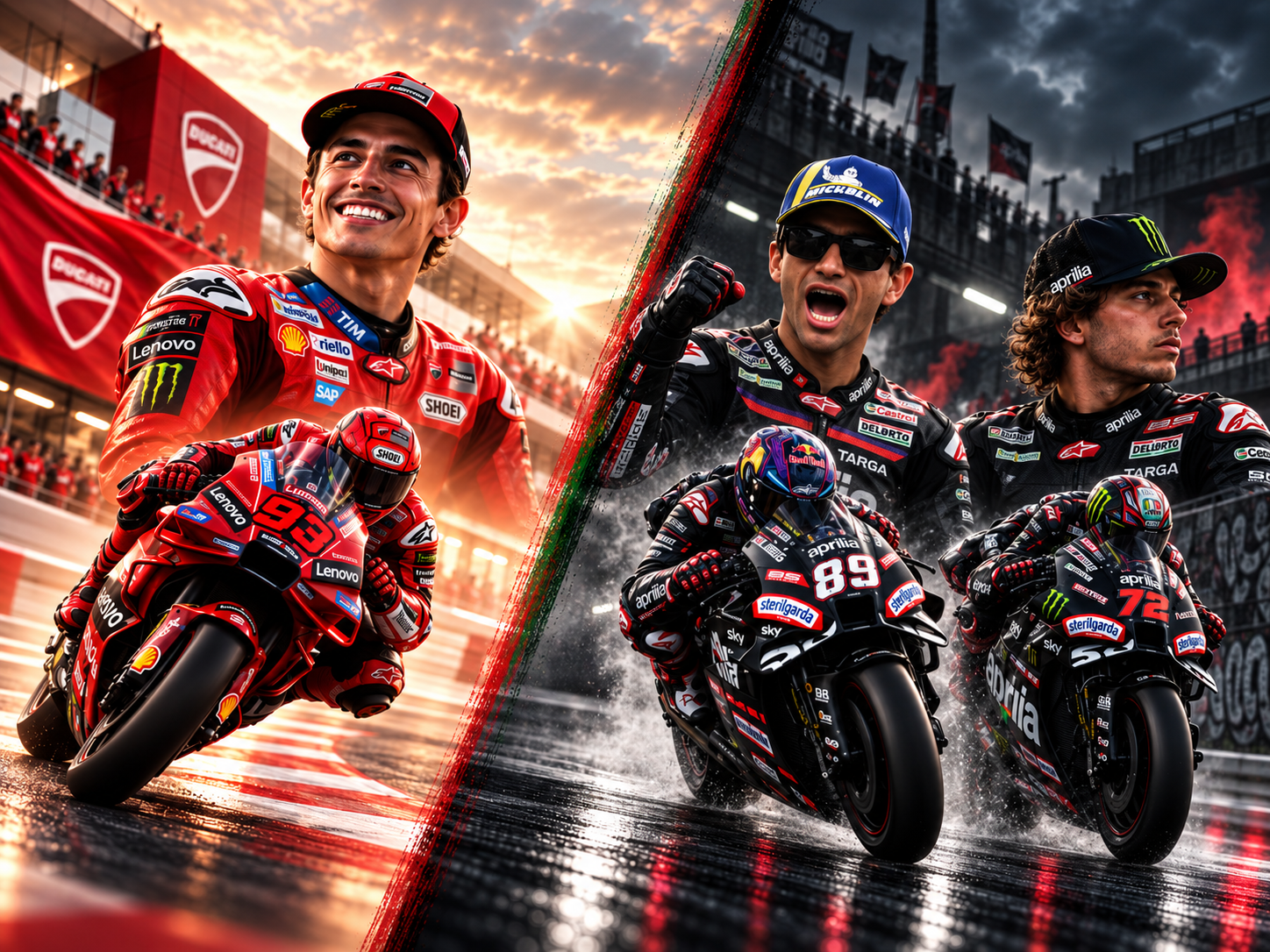
The race itself, surface drama notwithstanding, told a lucid story. Marco Bezzecchi took the holeshot and led from lights to flag, crossing the line over three seconds ahead of factory Aprilia teammate Jorge Martin — delivering an Aprilia 1-2 and securing his fourth consecutive Grand Prix win. That places him in exclusive company: Valentino Rossi, Marc Marquez, Jorge Lorenzo, and Francesco Bagnaia are the only other riders to have achieved the same feat in the modern MotoGP era.
Fabio Di Giannantonio completed the podium for VR46 Ducati after a race of sustained pressure on Marc Marquez, finally reclaiming third when the reigning champion was undone by the deteriorating surface at Turn 11. DiGiannantonio’s form across the opening rounds of 2026 — pole position, a Sprint podium, a Grand Prix podium — confirms him as a genuine presence in the title conversation, and currently the leading Ducati in the championship standings.
Martin’s second place deserves careful reading. His first podium in factory Aprilia colours came after a weekend of measured, intelligent race management — the kind of performance that signals a rider who has fully absorbed a new machine and found his rhythm within a team that is clearly the fastest package on the grid in the early months of 2026. The championship picture after two rounds is unambiguous: Aprilia leads, Bezzecchi leads within Aprilia, and Martin is the natural internal threat.
Bagnaia crashed out on lap 11. Marquez finished fourth. Ai Ogura impressed in fifth for Trackhouse. And Diogo Moreira — Brazilian home hero, reigning Moto2 World Champion, and MotoGP debutant — finished in the top twelve in conditions that would have tested riders with years of premier class experience. Given the weekend’s circumstances and the emotional weight of the occasion, that result should be judged for exactly what it was: a composed and credible beginning.
Estrella Galicia 0,0: The Title Sponsor That Did Its Homework
Strip back the race result and the track drama and the most strategically interesting story of the Brazilian Grand Prix weekend does not belong to any rider or manufacturer. It belongs to Estrella Galicia 0,0.
The Spanish non-alcoholic beer brand — already the Official Beer of MotoGP and title sponsor of the Grand Prix of Spain at Jerez — stepped forward as title sponsor of the Grand Prix of Brazil. The name on the event was the Estrella Galicia 0,0 Grand Prix of Brazil. That decision, which can look from the outside like a routine sponsorship extension, is on closer inspection a case study in how a brand should think about title sponsorship when it has genuine market strategy to back it up.
The infrastructure behind the decision is substantial. Hijos de Rivera, the family-owned Galician company behind Estrella Galicia, began exporting to Brazil in 2011 and established Estrella Galicia do Brasil, a dedicated subsidiary based in São Paulo, as the operational base for its Mercosur expansion. Years of on-ground commercial development followed across both off-trade and on-trade channels. Then, in 2021, came the commitment that removed any ambiguity about how seriously the company takes the Brazilian market: the announcement of a new brewery in Araraquara, in the state of São Paulo — 270 kilometres from the capital — representing an investment of BRL 2 billion (approximately $360 million at the time of announcement). The plant, the first Estrella Galicia production facility outside Spain in the company’s 115-year history, was designed for a final capacity of 3 million hectolitres of beer per year, executed in two phases of 1.5 million hectolitres each. Phase one was targeted for completion by end of 2023.
“Our company is strongly linked to a market with a solid brewing tradition and culture, such as Brazil, where we have a long-standing presence thanks to our firm and longstanding commitment to the country through our own subsidiary.” — Ignacio Rivera, Executive Chairman, Corporación Hijos de Rivera
To be explicit about what that investment represents: Estrella Galicia has built its only brewery outside Spain — ever — in Brazil. When they placed their name on the Grand Prix of Brazil, they were not experimenting with a new market. They were activating a commercial presence they had spent over a decade building and hundreds of millions of dollars constructing. The title sponsorship was not the strategy. It was the visible expression of a strategy already in execution.
The second dimension of their approach is the one that makes it genuinely exceptional within motorsport sponsorship: the talent pipeline. Diogo Moreira did not simply arrive at Goiânia as a home hero for the crowd to celebrate. He arrived as a product of the Estrella Galicia rider development programme — backed by the brand through the junior classes, carried through Moto3 and Moto2, and now into MotoGP. He arrived as reigning Moto2 World Champion. He arrived as an Estrella Galicia ambassador. And he arrived in his home country, racing in a Grand Prix that carried the name of the brand that had invested in his career.
The narrative compression of that weekend is extraordinary. In a single event, Estrella Galicia activated simultaneously as title sponsor of the race, official beer of the championship, and long-term backer of the Brazilian rider making his premier class debut in front of his own fans. Every broadcast angle, every podium ceremony shot, every post from Moreira’s considerable Brazilian social following carried an implicit reference to the brand that had been there from the beginning. This is not sponsorship visibility. This is sponsorship storytelling.
From the Paddock: What Working With Estrella Galicia Taught Me
I have worked alongside Estrella Galicia at different stages of my career in the MotoGP paddock, and the consistency of their approach to sponsorship has always stood out in an environment frequently dominated by transactional partnerships. During my time working in hospitality at the elf Marc VDS team, their involvement went well beyond the conventional sponsor-team dynamic. They were present in the narrative of the riders they supported — embedded in the storytelling, not just visible on the livery.
That investment in people, sustained over years rather than seasons, produced returns that logo placements never could. The Marc VDS partnership with Estrella Galicia yielded two Moto2 World Championships: Franco Morbidelli in 2017, Alex Marquez in 2019. Both riders had been part of the Estrella Galicia talent ecosystem well before those titles. Both became central to the brand’s story at the moment they reached the top. The brand did not attach itself to winners. It created them — and was there when they crossed the line.
That same philosophy is now operating at a larger scale. Marc Marquez has been an Estrella Galicia ambassador for over a decade. Alex Marquez similarly. José Antonio Rueda, the 2025 Moto3 World Champion, came through their programme. Diogo Moreira since his junior years. In 2025, Estrella Galicia-backed riders took world titles across three classes. This is not a marketing exercise deployed at championship time. It is a system, built patiently and maintained consistently.
What Goiânia demonstrated is that system operating at its full potential: a brand with deep market roots, a production facility in the host country, and the national hero of that country as the face of their rider development programme — all converging in a single weekend, under their name, on the world stage. It is difficult to construct a more complete example of what aligned sponsorship strategy looks like in practice.
Six Races Without a Title Sponsor: The Calendar Is Advertising an Opportunity
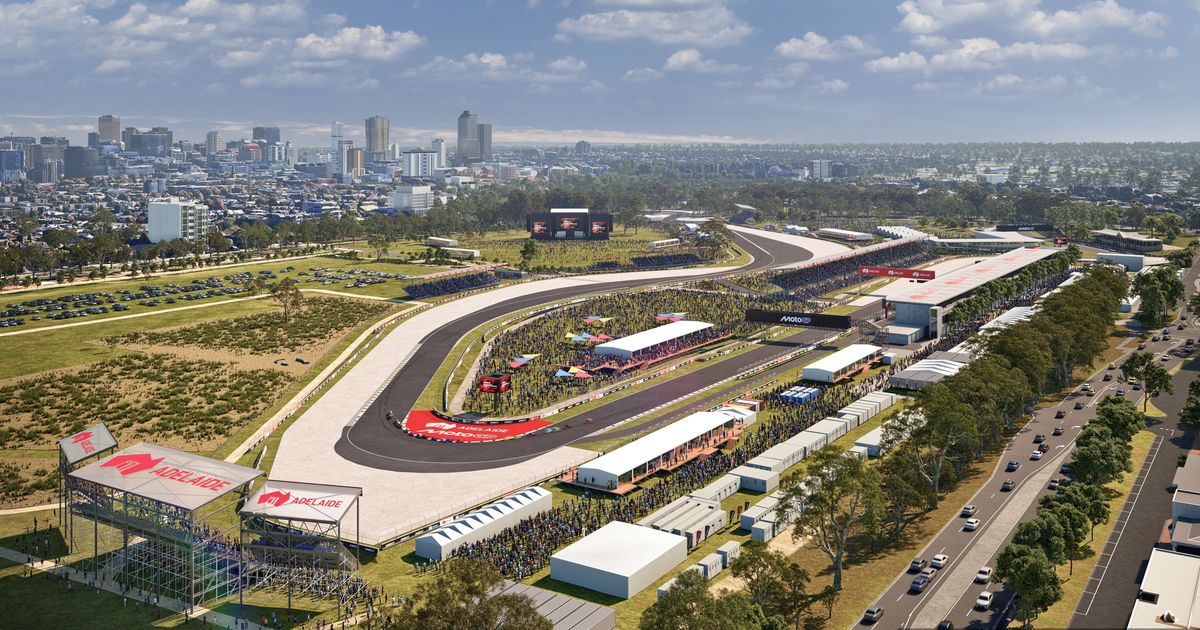
The 2026 MotoGP calendar carries 22 Grands Prix. Six of them — Hungary, Czech Republic, the Netherlands, Aragón, Australia and Austria — currently carry no title sponsor. For a brand with the right geographic ambitions and the commercial intelligence to activate properly, each of those six events represents a specific kind of opportunity. Not equivalent opportunities — the markets are different, the audiences are different, the competitive dynamics are different. But opportunities nonetheless, and ones that will become more expensive to access as MotoGP grows under Liberty Media management.
The Estrella Galicia model offers the blueprint. Title sponsorship without market activation is a billboard at a festival nobody attends from your postcode. Title sponsorship built on genuine local presence — commercial infrastructure, adapted product, local storytelling, community engagement — is something else entirely. The question is not which of these six races is cheapest to name. It is which one aligns with where your brand is actually building something.
Here is the commercial profile of each:
Hungarian Grand Prix — Balaton Park — June 2026.
Czech Grand Prix — Brno — June 2026.
Dutch Grand Prix — TT Circuit Assen — June/July 2026.
Aragón Grand Prix — MotorLand — August 2026.
Austrian Grand Prix — Red Bull Ring — September 2026.
Australian Grand Prix — Phillip Island — October 2026.
The through-line across all six is this: none of them are just race venues. They are geographic entry points into specific commercial communities. The brands that will extract maximum value from any of them are not those that write the cheque and hang the banner. They are those that build behind the title a genuine activation architecture — local market storytelling, digital and social content, guerrilla moments in the streets of the host city or region, community engagement that makes the brand feel as if it belongs to the event rather than having merely rented access to it.
A title sponsorship without local activation is a billboard at a festival nobody from your market attends. A title sponsorship built on genuine market integration is a door into a community. Estrella Galicia understood the difference. Most brands still don’t.
The window will not be open indefinitely. As MotoGP’s commercial infrastructure matures under Liberty Media, the cost of these naming rights will increase. The brands that move now — with real market strategy behind the logo, with activation plans that go beyond corporate hospitality — will capture the best return on the relationship.
Conclusion: What Brazil Actually Proved
The Estrella Galicia 0,0 Grand Prix of Brazil was imperfect. The circuit broke. Riders were struck by asphalt. The race was shortened with five minutes’ notice. Some of them were, rightly, angry.
And yet the event was a success — commercially, symbolically, and in terms of what it demonstrated about MotoGP’s capacity to manage complexity in a re-entry market. The Aprilia 1-2 gave the sport a clear competitive narrative. Bezzecchi’s fourth consecutive win gave the championship a dominant early-season story. DiGiannantonio’s pole and podium gave the paddock a fresh title voice. And Moreira’s debut, in front of a sold-out crowd in his home country, gave Brazilian motorsport a moment it had been waiting two decades to have.
Estrella Galicia did not simply put their name on the weekend. They earned the right to own its narrative — through over a decade of commercial commitment to the Brazilian market, through $360 million invested in local production infrastructure, and through years of investment in the rider who became the centrepiece of the entire event. That is the difference between a sponsor and a partner. And in the Liberty Media era of MotoGP, that distinction is going to matter more, and cost more to ignore, than it ever has before.
The Goiânia circuit will need serious resurfacing before MotoGP returns. The commercial model Estrella Galicia demonstrated there needs no repairs whatsoever.